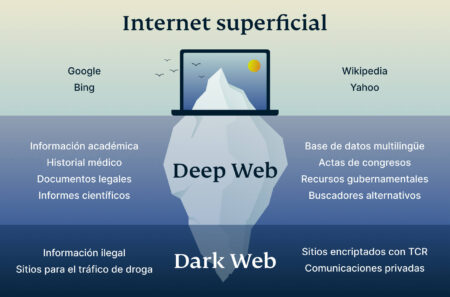
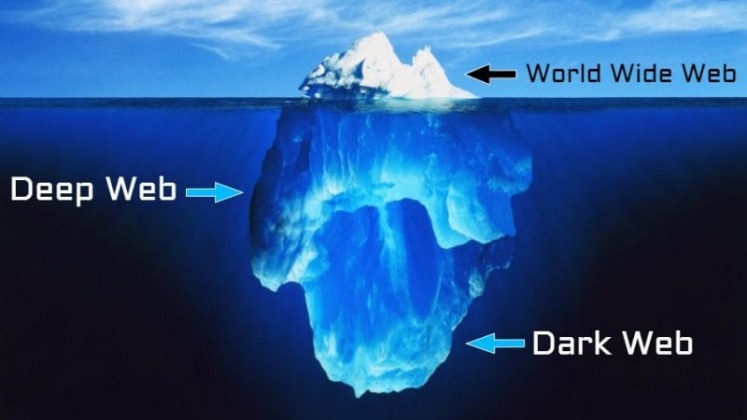
With only about 4 percent of all online content freely accessible (making up the surface web), the remainder is tucked away in the deep web. Later, when people search for specific content, the results appear in a search engine such as Google, where the content is then openly viewable. These systems typically scan websites that contain .com, .org., .net, or a similar domain as well as some data and posts at social media sites. Content that resides on the surface web is accessible because software robots called “spiders” or “crawlers” capture and index it, and search engines assign it rankings.
What Are The Risks Of Accessing The Dark Web?
Their IP addresses are obscured, so you can’t easily discover who is hosting the site or where it’s located. This anonymity serves many purposes, both good and bad. This same technology was later released to the public, allowing anyone to browse the internet without being tracked. The technology behind it, primarily the Tor network, was originally developed by the U.S.
Thus, communication between darknet users is highly encrypted allowing users to talk, blog, and share files confidentially. Identities and locations of darknet users stay anonymous and cannot be tracked due to the layered encryption system. Tor browsers create encrypted entry points and pathways for the user, allowing their dark web searches and actions to be anonymous.
- Simply put, search engines use software (called crawlers or web spiders) that visit all sites and send them for indexing.
- It will make your VPN activities seem like normal traffic, so you can use an uncensored internet.
- It’s no bad thing for data to be buried deep, invisible to those for whom it is not intended.
- The deepweb has many common uses such as webmail, Medical records, Research papers, legal documents, private social media pages and profiles.
Install and run strong, trusted security software on your computer and devices to help ensure the privacy and security of your data. There are publications on the dark web whose editors and founders believe it’s the only way to obtain and sustain a truly free press. Visiting the dark web, though, is different than accessing the deep web. You can find dark web search engines, with one of the most popular being the Uncensored Hidden Wiki. You might also have questions about accessing the dark web, as well as questions about safety.
Hacking Groups And Services
To help remember the differences between the surface web, the deep web, and the dark web, think of the differences between “public,” “private,” and “secret.” The dark web, on the other hand, makes up a tiny fraction of the internet as a whole. When you log in to your favorite video streaming site or check your bank account balance online, that’s the deep web at work.
CSO Executive Sessions: Leading The Charge On Cyber Agility For Southeast Asia’s Digital Future
Without visible links, these pages are more hidden for various reasons. In case you’re wondering how to access the deep web, chances are you already use it daily. The Internet is sizable with millions of web pages, databases, and servers all run 24 hours a day. Countries differ in how aggressively they monitor Dark Web activity.
Myth 1: The Dark Web Is Only Used For Illegal Activities
The threat can extend to your entire network of devices connected to the internet. For example, China uses the Great Firewall to block access to Western sites. You could be monitored closely even if you are not doing anything illegal.
BBC Tor Mirror
Many people use it for privacy-focused communication, whistleblowing, or accessing restricted information in censorship-heavy regions. Accessing the Dark Web, a part of the web that isn’t indexed by standard search engines, is not illegal in most countries. The dark web marketplaces thrive on the demand for illegal services and extreme content.
Phishing sites or malware can be used to gain access to your login credentials potentially leading to data theft or account takeover. While it’s best known for underground markets, drug sales, and hacking services, it also hosts legitimate content. The Dark Web is a hidden portion of the internet that can only be accessed through specialized software like Tor or I2P. People use it daily when accessing personal accounts or cloud storage. This means that its content can’t be accessed through regular search engine results.
The Deep Web Is Generally Safer And More Secure Than The Dark Web
The surface web hosts most online activity; hence, it would be a very lively space for the exchange of information and commerce. Unlike the surface web, which is easily accessible and often serves legitimate purposes, the deep web holds valuable information that typically requires specific access credentials or subscriptions. The deep web vs dark web are often misconstrued as being one thing when in reality they represent two different levels of the internet. The dark web is far from an illicit-themed zone but rather a liberating site for journalists and activists, for instance, to converse privately in constrained freedom-of-speech environments.
The security implications of the surface web differ significantly from its hidden counterparts. Everyday internet users, businesses, institutions Generally legal content with controlled access Mixed – platform itself legal, many activities illegal Understanding the key differences between the dark web and deep web helps security leaders properly assess their organization's exposure to these distinct internet segments. The Deep Web thus balances safeguarding data with the practicalities of access, a dynamic critical to modern digital operations.
It does this through automated bots known as crawlers, which start out on websites already known to the search engine and visit every link on said websites before doing the same on the next site, and so on. In order to properly understand how the deep web works, you first have to understand a few fundamentals of how the regular internet operates, especially as it relates to search engines. Websites that exist purely on the deep web have different access, so there’s a level of privacy for the website hosts that isn’t possible on the regular internet. Most of these are databases and intranet sites that typically aren’t what you’d think of when you hear the term “deep web,” but even if you exclude these, the websites on the deep web vastly outnumber those on the regular surface web.
Reconnoitre – Open-Source Reconnaissance And Service Enumeration Tool
The deep web refers to non-indexed webpages as a whole, while dark web refers more specifically to the parts of the deep web where you can engage in illicit activities. If your website is only accessible through the deep net, tracking down the physical location of your servers is much harder than it would be for a regular website. Because of this, tracking down the web addresses of deep web sites is a much more manual process. When not demystifying digital security, he indulges in diverse hobbies from bonsai to powerlifting. His work is featured in Cloudwards and he has been quoted in The Daily Beast, reflecting his dedication to internet privacy. He also leads the video production team and helps craft e-courses on online technology topics.
Roundup – Best VPNs For The Dark Web
Millions of regular internet users access private databases such as email inboxes and credit card accounts daily. The main risk is accessing sites that involve illegal activities. Think password-protected websites, subscription services, banking portals, and even the private contents of your email inbox. The dark web is a hidden part of the internet that is not indexed by search engines and requires special software, such as the Tor browser, to access. But, a larger part of the internet is “hidden” and not shown to the public, for e.g. you may get access to a website and its content, but you don’t get access to its code, theme files, visitor logs, etc. Also, most of the general public never gets access to the unindexed content or the Deep web, whatever we need, can almost always be found on the clearnet and easily too via search engines and most people are satisfied with that.
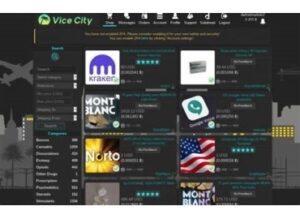
Commercial darknet markets mediate transactions for illegal goods and typically use Bitcoin as payment. Botnets are often structured with their command-and-control servers based on a censorship-resistant hidden service, creating a large amount of bot-related traffic. In July 2017, Roger Dingledine, one of the three founders of the Tor Project, said that Facebook is the biggest hidden service.
Meta (Facebook’s parent) made this onion website for its users on Tor browsers because it showed errors for its normal website (facebook.com). Did you hear about the silk road, an online black market infamous for unlawful activities that was shut down in 2013 by the FBI? It’s run by global volunteers who become relay operators by donating their bandwidth and IP address for whatever Tor users do. And since normal browsers can’t browse such websites, you need something like the Tor browser to surf the dark web.
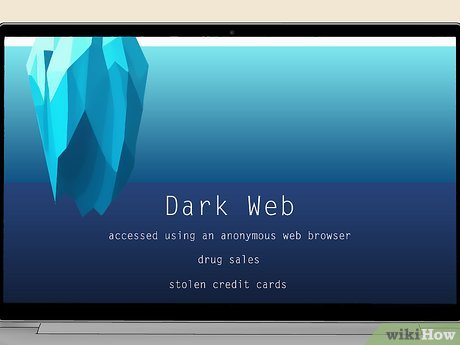
If you need to access dark web resources, these are the steps you need to take. There are many legitimate uses for dark web services and communication. The aim is to reduce your online footprint as much as possible, anonymize your traffic, and disguise your location.
Remember that no security measure is perfect, and using the dark web, in particular, always carries some risk. The dark web, on the other hand, is a much smaller subsection of the deep web that requires special tools like the Tor browser to access. While it protects your identity, it can also expose you to interactions with dangerous threat actors. It’s important to note that the Dark Web is not inherently illegal. Users can browse and host sites without revealing who they are or where they’re located.