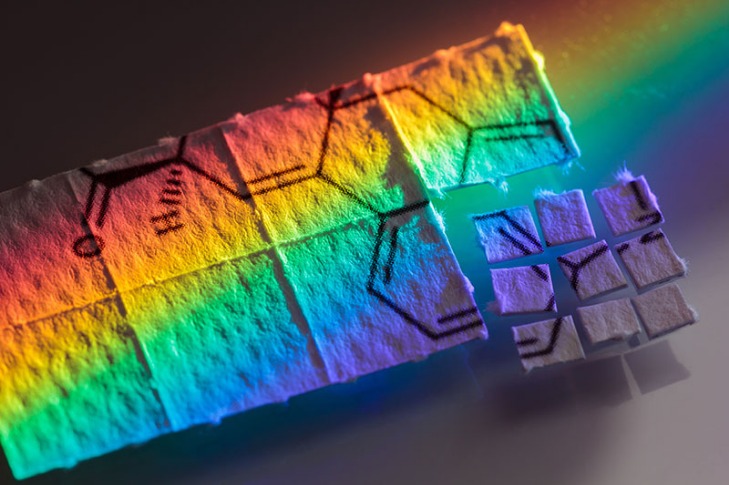
LSD art is any art or visual displays inspired by psychedelic experiences and hallucinations known to follow the ingestion of LSD (also known colloquially as acid). By the mid-1960s, the youth countercultures in California, particularly in San Francisco, had widely adopted the use of hallucinogenic drugs, including LSD. Presumed or known prodrugs of LSD, including 1A-LSD (ALD-52), 1P-LSD, and 1V-LSD, have been developed or encountered.
User may feel "out of it" and generally off the day after, esp. with larger doses. It is active at extremely low doses and is most commonly available on blotter or in liquid form. It is the standard against which all other psychedelics are compared. It is used mainly as an entheogen, recreational drug, and as an agent in psychedelic therapy.
Effects Of Lsd
However if LSD is used daily for several days tolerance to its hallucinogenic effects will build up, meaning a user requires larger doses of LSD to achieve the same result. Setting includes the social and physical conditions that the individuals take drugs within. It is sometimes counterfeited by certain other psychedelics that also happen to be potent enough to be laid onto blotter paper (while also being cheaper). In one study, morphine addicts administered LSD regularly for weeks did not recognize when the drug was exchanged for a placebo and experienced no withdrawal symptoms. A 2018 study demonstrated neuroplasticity induced by LSD and other psychedelics through TrkB, mTOR, and 5-HT2A signaling.
Relation To Brandon Andres Green
The duration of LSZ is reported to be in the range of 3 to 11 hours, with a median duration of around 8 hours. This dose range is notably higher than that of LSD, which is 50 to 200 μg with a typical dose of about 100 μg. LSZ, as the (S,S)- isomer LA-SS-Az, has been reported to have a dose range of 100 to 200 μg or 100 to 300 μg orally, with a typical dose estimate of 150 or 200 μg. 1V-LSD is the condensation product of valeric acid (pentanoic acid) and LSD, where the valeroyl group is substituted on the NH position of the indole moiety. A head-twitch response assay in mice found that 1V-LSD has a similar potency to 1P-LSD and 1cP-LSD, with behavioral effects also closely resembling these structural analogs.
Chemistry
The January 4, 2007 issue of the New England Journal of Medicine includes a paper that documents a British study of more than 11,000 Parkinson's disease patients. Ergot extract has been used in pharmaceutical preparations, including ergot alkaloids in products such as Cafergot (containing caffeine and ergotamine or ergoline) to treat migraine headaches, and ergometrine, used to induce uterine contractions and to control bleeding after childbirth. Reduced prolactin due to ergot alkaloid activity on dopamine receptors in the pituitary is also common in livestock. The Hospital Brothers of St. Anthony, an order of monks established in 1095, specialized in treating ergotism victims with balms containing tranquilizing and circulation-stimulating plant extracts.
The History Of Other Drugs
In particular, the classes of stimulants that demonstrate possible cognition-enhancing effects in humans have evidence in vitro as direct agonists or indirect agonists of dopamine receptor D1 or adrenoceptor α2. Many dissociatives have general depressant effects and can produce sedation, respiratory depression, analgesia, anesthesia, and ataxia, as well as cognitive and memory impairment and amnesia. Drugs containing the tryptamine moiety are typically substrates for the serotonin receptors, in keeping with their close structural resemblance to serotonin, a neurotransmitter. Substituted amphetamines are a chemical class of stimulants, entactogens, hallucinogens, and other drugs. Users of empathogens say the drugs often produce feelings of empathy, love, and emotional closeness to others.
Visual Alteration
1P-LSD was first described as well as encountered as a novel designer drug in 2015. These findings are supported by the similar duration and behavioral effects of 1P-LSD and LSD in both animal and human experiments. Indeed, following intravenous administration in humans 1P-LSD is detectable in serum for no longer than 4 hours, after which it is completely converted to LSD.
Both LSD and ALD-52 were reported to be active at doses of 0.5 to 1 μg/kg orally (35–70 μg for a 70-kg person). The drug is a key parent compound and inspiration for the 1-acyllysergamide prodrugs like 1P-LSD that were developed by Lizard Labs and emerged as designer drugs in the mid-2010s. ALD-52 is a 1-acyllysergamide, specifically the 1-acetyl derivative of LSD, and is closely related to other 1-acyllysergamide LSD prodrugs, such as 1P-LSD, 1V-LSD, and 1cP-LSD. The Multidisciplinary Association for Psychedelic Studies (MAPS) has supported psychoanalytic research using LSD, carrying on Hofmann's legacy and setting the groundwork for future studies. He was surprised to find the active compound of ololiuqui, ergine (LSA, lysergic acid amide), to be closely related to LSD.
Despite objections from the scientific community, authorized research into therapeutic applications of psychedelic drugs had been discontinued worldwide by the 1980s. Throughout the 1960s, concerns raised about the proliferation of unauthorized use of psychedelic drugs by the general public (and, most notably, the counterculture) resulted in the imposition of increasingly severe restrictions on medical and psychiatric research conducted with psychedelic substances. Proponents believed that psychedelic drugs facilitated psychoanalytic processes, making them particularly useful for patients with conditions such as alcoholism that are otherwise difficult to treat. From the second half of the 1950s, Beat Generation writers like William Burroughs, Jack Kerouac and Allen Ginsberg wrote about and took drugs, including cannabis and Benzedrine, raising awareness and helping to popularise their use. a debate over how ethical White's actions were, with some arguing that if his motive was to legally make people suffer, he was unethical, while others argue that if he believed that the experiments would benefit national security, his actions could be justified. Furthermore, the CIA operatives in charge of administering these experiments were told by superiors that the results of the experiments would be beneficial to the country.|As for the anecdotes about exercise, they likely experienced a "runner's high" due to their bodies releasing endorphins, which are endogenous opioid agonists, along with anandamide and other endogenous cannabinoid agonists. ] and drug residues typically play no significant role in their occurrence and recurrence. Jimson weed is highly toxic and can cause delirium, confusion, hallucinations, blurred vision, photophobia, dry mouth, urinary retention, hyperthermia, incoordination, hypertension, and rapid heartbeat among other effects.|Since 2005, law enforcement in the United States and elsewhere has seized several chemicals and combinations of chemicals in blotter paper which were sold as LSD mimics, including DOB, a mixture of DOC and DOI, 25I-NBOMe, and a mixture of DOC and DOB. Blotter art designs printed on blotter paper can serve to identify dose strengths, different batches, or makers. About the same time as blotter paper LSD came "Windowpane" (AKA "Clearlight"), which contained LSD inside a thin gelatin square a quarter of an inch (6 mm) across. After tablets came "computer acid" or "blotter paper LSD", typically made by dipping a preprinted sheet of blotting paper into an LSD/water/alcohol solution. Appearing in 1968 as an orange tablet measuring about 6 mm across, "Orange Sunshine" acid was the first largely available form of LSD after its possession was made illegal.|However, this was not definitely confirmed until formal studies were done in the 2010s and 2020s. ALD-52 was thought to act as a prodrug of LSD since at least the 1960s. ALD-52 itself was first definitely encountered as a novel designer drug in Europe in 2016.|The drug might have analgesic properties related to pain in terminally ill patients and phantom pain and might be useful for treating inflammatory diseases such as rheumatoid arthritis due to anti-inflammatory effects. The results of the study found that 100 μg was the optimal dose to reduce anxiety among the studied patients. As the drug is illegal in many areas of the world, potential medical uses have historically been difficult to study. One study concluded, "The root of the therapeutic value of the LSD experience is its potential for producing self-acceptance and self-surrender," presumably by forcing the user to face issues and problems in that individual's psyche.|The drug acts as a non-selective serotonin receptor agonist, including of the serotonin 5-HT2A receptor. LSZ, also known as lysergic acid 2,4-dimethylazetidide or as LA-Azetidide (LA-Az), is a psychedelic drug of the lysergamide family related to lysergic acid diethylamide (LSD). 1V-LSD, also known as 1-valeryl-LSD or by the nickname Valerie, is a psychedelic drug of the lysergamide family related to lysergic acid diethylamide (LSD). Lysergic acid hydroxyethylamide (LSH or LAH), also known as lysergic acid N-(α-hydroxyethyl)amide or as lysergic acid methyl carbinolamide, is a lysergamide alkaloid related to the psychedelic drug lysergic acid diethylamide (LSD). In a study that reviewed a variety of drugs to determine if it had an impact on symptoms of OCD, psilocybin was also tested and determined effective in reducing symptoms. For this reason, the plant sources of some psychedelic drugs such as ayahuasca and mescaline-containing cacti are sometimes referred to as "plant teachers" by those using those drugs.}
As of 2021, psychedelic drugs are controlled substances in most countries and psychedelic therapy is not legally available outside clinical trials, with some exceptions. Psychedelic therapy (or psychedelic-assisted therapy) is the proposed use of psychedelic drugs to treat mental disorders. Although people of Western culture have tended to use psychedelics for either psychotherapeutic or recreational reasons, most indigenous cultures, particularly in South America, have seemingly tended to use psychedelics for more supernatural reasons such as divination.
- He also produced and/or collaborated with others in the creation of multimedia presentations and computer games.
- However, this was not empirically confirmed until formal studies were finally done in the 2010s and 2020s.
- As the psychedelic field attracts increasing financial interest, critics have raised alarms about the ethical and structural implications of venture capital investment, aggressive patent strategies, and the potential monopolization of psychedelic therapies.
- Similarly to the findings with a strong CYP2D6 inhibitor, a pharmacogenomic clinical study with LSD found that LSD levels were 75% higher in people with non-functional CYP2D6 (poor metabolizers) compared to those with functional CYP2D6.
- Hallucinogen is now, however, the most common designation in the scientific literature, although it is an inaccurate descriptor of the actual effects of these drugs.
- On November 6, the DEA seized 215 pounds of lysergic acid, 52 pounds of iso-LSD, and 42 pounds of ergocristine, and potentially 91 pounds of a substance containing some amount of LSD.
However, detecting LSD in human tissues is more challenging due to its active dose being significantly lower (in micrograms) compared to most other drugs (in milligrams). The acute effects of LSD normally last between 6 and 12 hours depending on dose, tolerance, and age. In an earlier 2016 study, intravenous LSD effects similarly peaked after about 1.7 hours.
Psychedelic Era
It is believed that the peasantry and children were most susceptible to ergotism, though the wealthy were afflicted as well, as, at times, entire villages relied on tainted crops for sustenance, and during times of famine, ergotism reached into every house. These medical recipes have been lost to time, though some recorded treatments still remain. Tessier, observing a huge epidemic in Sologne, France, in which more than 8,000 people died, recommended drainage of fields, compulsory cleaning of grain, and the substitution of potatoes for affected grain. The first mention of a plague of gangrenous ergotism in Europe comes from Germany in 857; following this, France and Scandinavia experienced similar outbreaks; England is noticeably absent from the historical regions affected by ergotism as its main source of food was wheat, which is resistant to ergot fungi.
Huxley tried LSD for the first time in 1955, obtained from "Captain" Al Hubbard. In 1954 Huxley recorded his experiences in the landmark book The Doors of Perception; the title was drawn from a quotation by British artist and poet William Blake. The governors of Nevada and California each signed bills into law on May 30, 1966, that make them the first two American states to outlaw the manufacture, sale, and possession of the drug. It produces no aphrodisiac effects, does not increase creativity, has no lasting positive effect in treating alcoholics or criminals, does not produce a 'model psychosis', and does not generate immediate personality change. Although the study of LSD and other hallucinogens increased the awareness of how chemicals could affect the mind, its use in psychotherapy largely has been debunked.
Lysergic Acid Diethylamide Toxicity
Levels of O-H-LSD in urine have been found to be 4 to 40 times higher than those of LSD, indicating extensive metabolism of LSD into this compound. Doses of LSD are said to be similar by oral and injectable routes, with the exception of intrathecal injection in which the dose is reduced to about one-third of usual. In a 2025 pharmacokinetic study comparing oral and intravenous LSD, the onset orally was about 45 minutes and the onset by intravenous injection was about 2.5 minutes. However, contradicting the preceding claims, other sources have stated that intravenous injection of LSD results in onset of effects within a few minutes. Following a typical 100 μg dose in humans, this would be about 1 μg that is distributed into the brain. In terms of distribution, it is estimated that only about 1 to 1.5% of the drug reaches the brain both in animals and humans.
- As of 2021, psychedelic drugs are controlled substances in most countries and psychedelic therapy is not legally available outside clinical trials, with some exceptions.
- Moreover, the HTR paradigm is one of the only animal tests that can distinguish between hallucinogenic serotonin 5-HT2A receptor agonists and non-hallucinogenic serotonin 5-HT2A receptor agonists, such as lisuride.
- Even at low (i.e. sub-psychedelic) dosages, it was found to be at least as effective as traditional opiates, while being much longer lasting in pain reduction (lasting as long as a week after peak effects had subsided).
- LSD microdosing is being clinically studied in the treatment of Alzheimer's disease for its anti-inflammatory effects.
Forms Of LSD-25
These acts were illegal and several significant operational techniques were developed in this theater, including extensive research into sexual blackmail, surveillance technology and the possible use of mind-altering drugs in field operations. These drugs could also have amnesia effects, which were intended for use on foreign spies following interrogations and retiring CIA agents. Relatedly, per Shulgin in his 1997 book TiHKAL (Tryptamines I Have Known and Loved), both ergine (lysergic acid amide; LSA) and isoergine (iso-LSA) are "probably correctly dismissed" as not contributing to the effects of morning glory seeds. According to Albert Hofmann, Alexander Shulgin, and other researchers, LSH might be a psychedelic drug and might contribute to or be substantially responsible for the hallucinogenic effects of morning glory seeds.
Other instances are linked to associative reactions to contextual cues, similar to responses observed in individuals with past trauma or emotional experiences. Some cases are attributed to somatic symptom disorder, where individuals fixate on normal somatic experiences previously unnoticed prior to drug consumption. Despite lower rates of depression and substance abuse found in psychedelic drug users compared to controls, LSD presents heightened risks for individuals with severe mental illnesses like schizophrenia.
The affinity and activational potency of LSD at the human serotonin 5-HT2A receptor in vitro is unremarkable compared to other psychedelics such as DOI and DOB. LSD has been shown to have low affinity for H1 receptors, displaying antihistamine effects, although the significance of this at doses used in humans is unknown. Uniquely among serotonergic psychedelics, LSD also shows potentially significant affinity for the dopamine receptors, albeit much lower than for most of the serotonin receptors. The psychedelic effects of LSD are thought to be mediated specifically by activation of the serotonin 5-HT2A receptor.