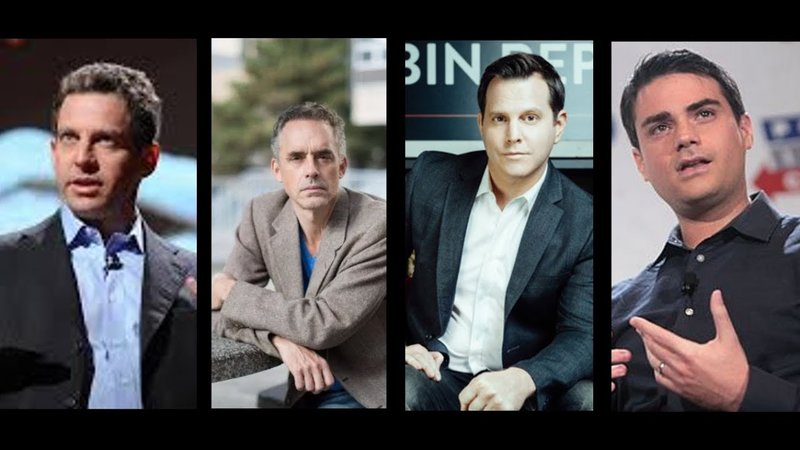
It primarily critiqued academia and mainstream media, but also the corporate world, government ,and Hollywood. The IDW can be understood as a broad-based (spanning the left and right) populist movement. Vivek Ramaswamy, 2024 Republican presidential candidate, appeared on Jordan Peterson’s podcast on March 21, 2023, and spoke about the emergence of the “new left” and wokism. And much of what’s published isn’t genuine scholarship, but pseudo-intellectual guff, whose purpose is to signal group membership and allow mediocre people to build careers without doing anything genuine. However, for some time, the arts and social sciences have been a political monoculture.
The Intellectual Dark Web’s Descent Into Paranoia And Trumpism
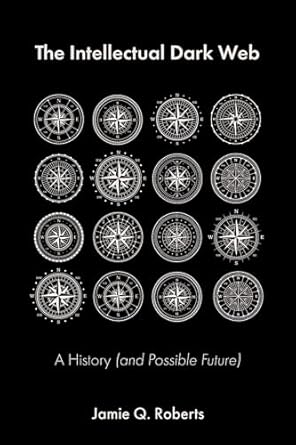
The book explores the Intellectual Dark Web (IDW), a group of thinkers who shaped public talks. Roberts' book provides a compelling history and a thoughtful analysis of one of the most interesting cultural movements of our time. "Pretty funny that the first major book about the premiere free speech movement of our time was silenced," he says. The book was politically incorrect and didn't pay due homage to "cultural" (scare quotes intended) norms.
Biden Uses The Gilded Cage Of The White House To His Advantage
If the IDW ever really existed as anything more than a catchy, not-quite-serious brand name for an informal intellectual community, there is little doubt that it no longer does. Bret Weinstein, once a Bernie Sanders-supporting leftist, now says that he “appreciates Trump” and would consider voting for him if he just got more fully on the Covidiot bandwagon (and agreed to pardon Julian Assange). Although the May 2018 article’s author, Bari Weiss, was largely sympathetic to the IDW, she wondered, “Could the intellectual wildness that made this alliance of heretics worth paying attention to become its undoing? But in typical dark web fashion, no one knows who put the website up. Feeling largely locked out of legacy outlets, they are rapidly building their own mass media channels.
The Policemen Of Cultural Appropriation
I'm still as far left as I was before. The left told us "You're not welcome anymore." In fact, you're not even left—you're right, or, you know, if it's really pissed at you, you're alt-right, or you're a darling of the alt-right. So it's not surprising that, A) people in the Intellectual Dark Web would be prone to being de-platformed, and B) that we would be particularly sensitive to the danger of ruling certain opinions beyond the pale. What Eric was saying in coining the term Intellectual Dark Web is really that this is an intellectually unpoliced space, that it is a space outside of what he calls the "gated institutional narrative," which are the stories that we are supposed to believe. It at least, perhaps, seems to be particularly concerned with these kinds of phenomena that are occurring on the left.
Discover Content
I downloaded the book, and loved it. I found a downloadable PDF copy of the book while searching for something else. I guess I'm one of a very few readers who have the book. Once upon a time there was a good book titled "The Way of the Intellectual Dark Web," by Jamie Q. Roberts. But if you’re unwilling to make the hard decisions, you’re going to be left behind. And we’re going to see people who are tapping out, tapping out, tapping out—and we’re going to leave them behind.
Many of these figures, the Times noted, were building their own media channels. And Bhaskar Sunkara, editor of the socialist journal Jacobin, debate. President Trump’s nominee has written about how religious views and judicial views intersect — and sometimes collide. Henry Farrell is a professor of political science and international affairs at George Washington University. They also have resentments to be capitalized on, and a commitment to rationality that can all too easily be transformed into a commitment to rationalizing their less salubrious political desires.
Comments On This Article
This leads us to another important meaning of the term intellectual dark web, the suggestion that its ideas are not only controversial, but particularly innovative in our political moment. Instead, this movement may well be what some are calling the “intellectual dark web.” It is a heterogeneous group, bringing together neuroscientists, biologists, and psychologists with entrepreneurs, comedians, and sports commentators. The term has been applied to a loose network of public figures opposed to left-wing identity politics and political correctness. The intellectual dark web’s criticism of “woke” politics is centred on this disputed reality (and ideas about power) – spanning issues as diverse as biological sex and gender, debates over police violence and Black Lives Matter, and Diversity, Equity and Inclusion (DEI) policies.
Three Decision Points That Broke The IDW
- It’s hardly surprising that many of the people who embraced such a label would drift so quickly into a version of Alex Jones with a thesaurus.
- That was fine, I could get on board with that but was this IDW thing actually more than that, was it… an actual group of people?
- But again, plenty of people—Chait, Applebaum, Bovy, McWhorter, and other journalists, commentators, and academics—managed to push back against those trends and not, as McWhorter put it to me, “drift into poised lunacy.” Some IDW figures avoided that drift; some IDW-adjacent people who were not part of Weiss’s article were at its forefront.
- Lacking a majority of people who wholly agree with their positions, progressives, liberals, conservatives, and authoritarians have been caught in a decades-long struggle to mobilize people who partially agree—without excessively antagonizing those who partially disagree.
- But this typically did not include much consideration of the enabling terms of thought or discussion itself — least of all, of the media within which these take place.
Well, very quickly that ability to grow runs out, and then people want to know, “Why am I stuck in a position going nowhere? “That means that you’re set up, potentially for war, for civil unrest, for communism if people try to grab what their neighbor has, or fascism if people try to maintain order at all costs.” So, what happens when you deny people the ability to continue on the path to which they’re so addicted? In an interview recently published by Rebel Wisdom, a media group that regularly covers the IDW, Weinstein says this trait isn’t just simple contrarianism – it’s what many of our institutions need to survive the long term. The members of the IDW don’t all share a political cause, but rather, Weinstein suggests, they share the personality trait of disagreeableness, or a willingness to stick to your beliefs even when it comes at a high cost.
The world of truth is too dangerous for these vulnerable persons, so we must bubble wrap knowledge as to not harm their sensibilities, so the logic goes. We are selectively choosing which arguments are ok to make by a cabal of politically correct youth, who claim to stand for the oppressed. Instead of free inquiry being stopped when hypotheses are disproven, we now stop the pursuit of knowledge when ideas are perceived as offensive to oppressed communities. After The Young Turks had Sam Harris on their show and Dave Rubin saw how hostile and irrational the host was, Rubin left his job and started The Rubin Report, a show founded on open dialogue. Throughout history, thinkers who rejected mainstream opinion were ostracized from the community and branded as heretics. Those who seek truth aren’t afraid of defying society and are usually punished for it.
The Way Of The Intellectual Dark Web 1st Edition

Today, the radio waves have simply been replaced by YouTube, podcasts, and social media, platforms that can reach much larger audiences than the AM signals of yesteryear. According to Rubin, the IDW are people “who are figuring out ways to have the important and often dangerous conversations that are completely ignored by the mainstream. Eric Weinstein referred to the IDW as an intellectual movement in Weiss’s article but has since revised the labeling. “IDW members are not driving the conversation, and sometimes are being driven from it,”Henry Farrell, a professor of political science at George Washington University, writes. Given that such topics are a major focus of the IDW, commentators have argued the movement is a merely bull-polishing to shine up old ideas for clicks and Patreon donations. “Of course, the whole notion of drawing lines to keep people out is exactly what inspired the Intellectual Dark Web folks in the first place,” Weiss writes.
In principle, these dark web media stars are correct that reason and science belong to neither right nor left. What is apparently so novel about the “intellectual dark web” is not just its savvy use of Patreon or YouTube, but its claim to be eclectic and transpartisan. Aside from Ben Shapiro, who calls himself a “sometimes Trump” Republican, it is hard to find a member of this movement who identifies in any respect with the American conservative movement of the last half-century (Jordan Peterson occasionally calls himself a conservative, but as a Canadian, he can plausibly distance himself from the GOP).
Harris demurred, saying most of the people he’s now embarrassed by are IDW-adjacent figures he says he’s never met (or maybe met once). Szeps pushed back, expressing disappointment that Harris wasn’t as self-reflective as he could have been in assessing his own endorsements of certain people who turned out to be (essentially) nuts or frauds. Fear of offending his right-wing viewer base, Harris said, was why the ostensibly “liberal” Rubin would never criticize Trump for anything, at all.